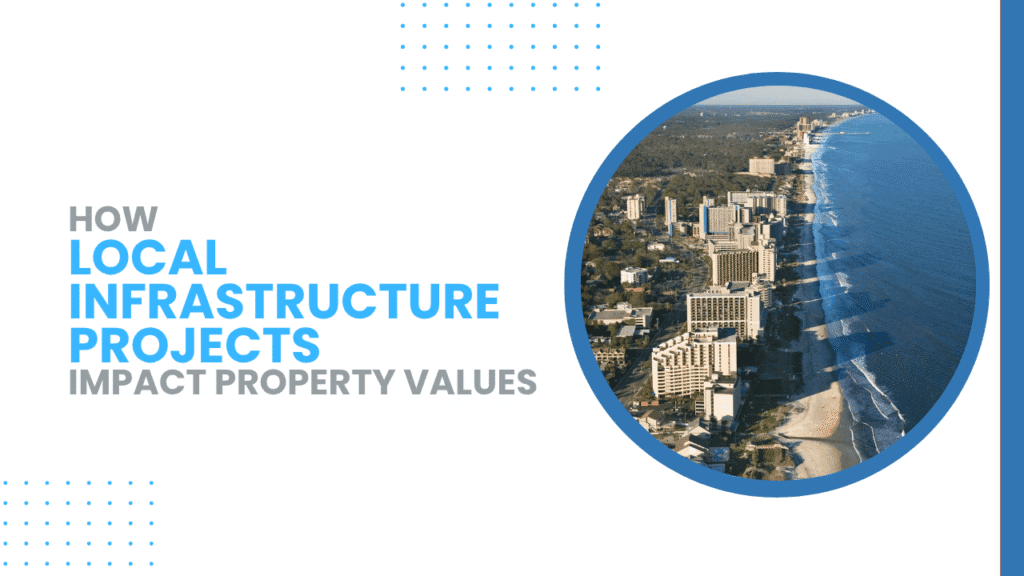
Have you noticed that Myrtle Beach just keeps growing?
That means infrastructure has to to keep up. Our community needs the capacity to support further development and an increasing population. We are no longer a coastal market driven solely by seasonal travel demand. Our growing economy, new schools, and neighborhoods require roads, utilities, public spaces, and transit upgrades. All of this plays a role in shaping not just the renter experience but the long-term value of your investment.
We’re considering how infrastructure projects influence property values in Myrtle Beach, why they matter to rental owners, and how you can stay ahead of trends that may affect your portfolio.
Our Summary:
|
Building Infrastructure that Matters
When we talk about infrastructure, we’re referring to the physical systems that support everyday life in a community like Myrtle Beach. We mean roads and bridges, public utilities including water and sewer and electricity. Infrastructure includes public transit and bike paths as well as parks and coastal protections. We have an airport that sees increasing traffic, and port facilities.
These are not the most glamorous parts of Myrtle Beach, but these systems form the foundation of what makes a location convenient, safe, and desirable.
For rental property owners, infrastructure affects:
- Accessibility
- Quality of life for renters
- Long-term appreciation
- Operational costs and maintenance
It’s worth understanding how changes in these systems can ripple through the local market and what they might mean for your property value.
Improved Roads and Accessibility Mean Higher Demand
Myrtle Beach is a major vacation and retirement destination. Its economy thrives on tourism, but many residents also commute to work across greater Horry County.
Major road expansions or upgrades like improvements to U.S. Highway 17, Highway 31, or the International Drive corridor reduce traffic congestion and make it easier for residents and visitors to get around. This impacts property values in a few ways:
- Reduced commute times make areas more desirable for year-round residents.
- Easier access increases vacation property appeal for renters and buyers.
- Investors see stronger occupancy and higher rents near improved corridors.
Public Transit and Connectivity Enhance Livability
While Myrtle Beach doesn’t have the scale of transit systems like those in major cities, investments in local transit and connectivity matter.
Shuttle services to beach attractions, expanded bus routes, and investments in pedestrian-friendly zones around popular districts (like downtown Myrtle Beach or near the Myrtle Beach Boardwalk) contribute to a walkable, accessible community. Businesses thrive in transit-accessible areas, strengthening local economies.
Increased demand often follows areas with better connectivity, and even modest transit improvements can lift rents and occupancy.
Water Management and Flood Mitigation Are Critical in Coastal Markets
Myrtle Beach is vulnerable to hurricanes, flooding, and rising sea levels. Infrastructure projects that focus on stormwater drainage systems, beach nourishment, seawalls and dune restoration, and improved sewer and water systems are essential to preserving property values.
- Properties with reduced flood risk are easier and cheaper to insure.
- Stable water and sewer systems improve tenant satisfaction.
- Enhanced coastal protections keep waterfront and near-shore properties appealing year after year.
Even if improvements aren’t immediately visible, they offer peace of mind and reduce risk, which shows up in pricing.
Parks, Trails, and Public Spaces Add Lifestyle Appeal to Myrtle Beach Homes
Investments in public amenities can make a rental neighborhood especially desirable to qualified tenants. Myrtle Beach and the surrounding Grand Strand area continue to build out:
- Beachwalks and boardwalk expansions
- Bike paths
- Neighborhood parks
- Waterfront promenades
These features encourage outdoor activity and enhance the overall lifestyle, which is something renters and buyers increasingly prioritize.
This impacts the market. It means rental properties near parks or paths are going to have higher rents. Families and long-term renters choose areas with high quality of life, so a strong sense of community can decrease vacancy rates.
Utility Upgrades and Their Relationship to ROI
Utility infrastructure may not make the headlines, but it supports higher property values. Upgrades to water and sewer lines, electric grid resilience, and broadband and internet services can significantly affect tenant satisfaction and operating costs.
- Faster, more reliable internet is a top amenity for remote workers.
- Updated water systems reduce the risk of outages.
- Stable electrical infrastructure minimizes downtime.
Properties in areas with aging utilities may underperform compared to modernized neighborhoods with better infrastructure.
Zoning and Land-Use Changes Influence Investment Potential
Infrastructure is shaped by planning policy. Zoning changes that allow for higher density, mixed-use developments, or accessory dwelling units (ADUs) can transform neighborhood prospects.
- Higher density zoning often attracts developers and increases nearby property values.
- Flexible land-use encourages new businesses and services.
- Smart growth can revitalize underperforming areas.
These things impact property prices and investor interest.
Monitor Infrastructure Projects
Being proactive gives you an edge. Stay informed by following the Myrtle Beach City Council, Horry County County Council, and the various planning and zoning boards.
These meetings discuss future projects long before construction begins, and you want to be able to identify new opportunities quickly.
Remember to assess risk when necessary, too. On rare occasions, infrastructure can lower property values. There may be temporary depressions due to construction noise, road closures, and environmental concerns.
For example, a major drainage project could reduce access or create noise for weeks or months. While the long-term benefits are often positive, short-term rental revenues can dip.
Local infrastructure projects are powerful forces in the real estate market. For Myrtle Beach rental property owners, they can:
- Increase accessibility and demand
- Enhance property appeal and command higher rents
- Protect properties from environmental risk
- Shape long-term appreciation trends
- Influence where buyers and renters choose to live
The smartest investors anticipate the way infrastructure shapes value, and understanding the projects in place and those that are planned can help you make more strategic decisions about acquisitions, pricing, and long-term portfolio growth.

 We can tell you more about how we see infrastructure impacting the market. Please contact us at J & P Unlimited. We manage investment properties in Myrtle Beach as well as Conway, Surfside Beach, Murrells Inlet, Socastee, and the surrounding areas.
